
Your Guide to Crafting Beats with Drum and Bass Samples
Drum and bass samples are the raw audio ingredients—the kicks, snares, hi-hats, and atmospheric loops—that you use to build the complex, high-octane rhythms the genre is famous for. For any producer, these aren’t just simple sounds; they’re the very genetic code of your track’s rhythm, delivering the punch and raw energy essential for an authentic DnB track.
What Are Drum and Bass Samples and Why They Matter
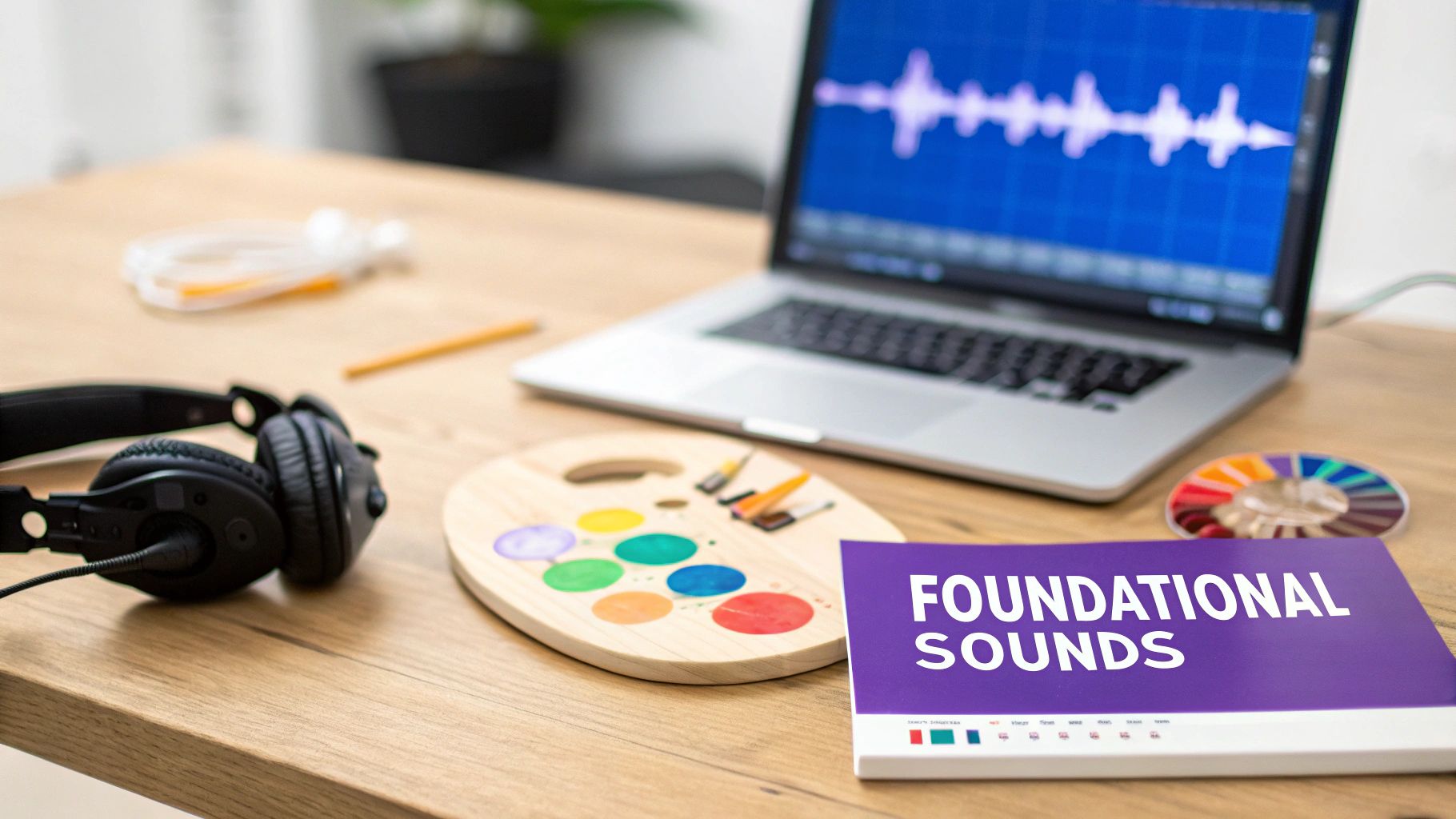
Think about trying to paint a masterpiece with just a single shade of gray. You could sketch out a brilliant idea, but the final piece would feel flat, lacking depth and emotion. High-quality drum and bass samples are like having a full artist’s palette bursting with vibrant colors. They give you the textures and tones you need to bring your musical ideas to life.
These sounds are far more than just recordings; they are the genre’s DNA. From the deep thud of a kick drum that anchors the low-end to the razor-sharp snare that slices through the mix, every single sample has a critical job to do. This sonic foundation is exactly what gives drum and bass its signature frantic energy and relentless forward momentum.
The Building Blocks of a DnB Beat
At its heart, every killer DnB track is built on a few key components. Getting to know their individual roles is the first real step toward building a rhythm section that sounds truly professional.
We can break down the absolute essentials into a simple table.
Core Components of a Drum and Bass Beat
| Sample Type | Role in the Mix | Common Characteristics |
|---|---|---|
| Kick Drum | The track’s heartbeat | Punchy and tight, providing weight without clashing with the sub-bass. |
| Snare Drum | Defines the backbeat | Delivers a sharp “snap” or “crack” that cuts through everything. |
| Breakbeat | Provides momentum | A full drum loop with intricate, rolling hi-hat and percussion patterns. |
These three elements form the core of your beat, working together to create that classic, driving DnB feel.
A great sample library is a shortcut to a professional sound. Instead of spending hours designing a single snare from scratch, you get access to thousands of genre-specific, mix-ready sounds that empower you to focus on what truly matters: your creativity.
Fueling a Production Revolution
The hunger for high-quality, ready-to-use sounds has never been greater. The global market for drum sample libraries hit a massive $412 million in 2024, a clear sign of the explosive demand from producers all over the world.
This number shows just how much curated, royalty-free collections—including the powerful FL Studio sound packs available today—are driving a new era in music production. You can dive deeper into this growing market over at MarketIntelo.
Ultimately, for any producer serious about making authentic, high-energy music, starting with premium drum and bass samples is non-negotiable. These sounds are the bedrock upon which every other element, from deep sub-basses to atmospheric pads, is built. They are the essential tools for creating tracks that hit hard in a club and keep listeners hooked.
The Anatomy of a Professional DnB Sample Pack
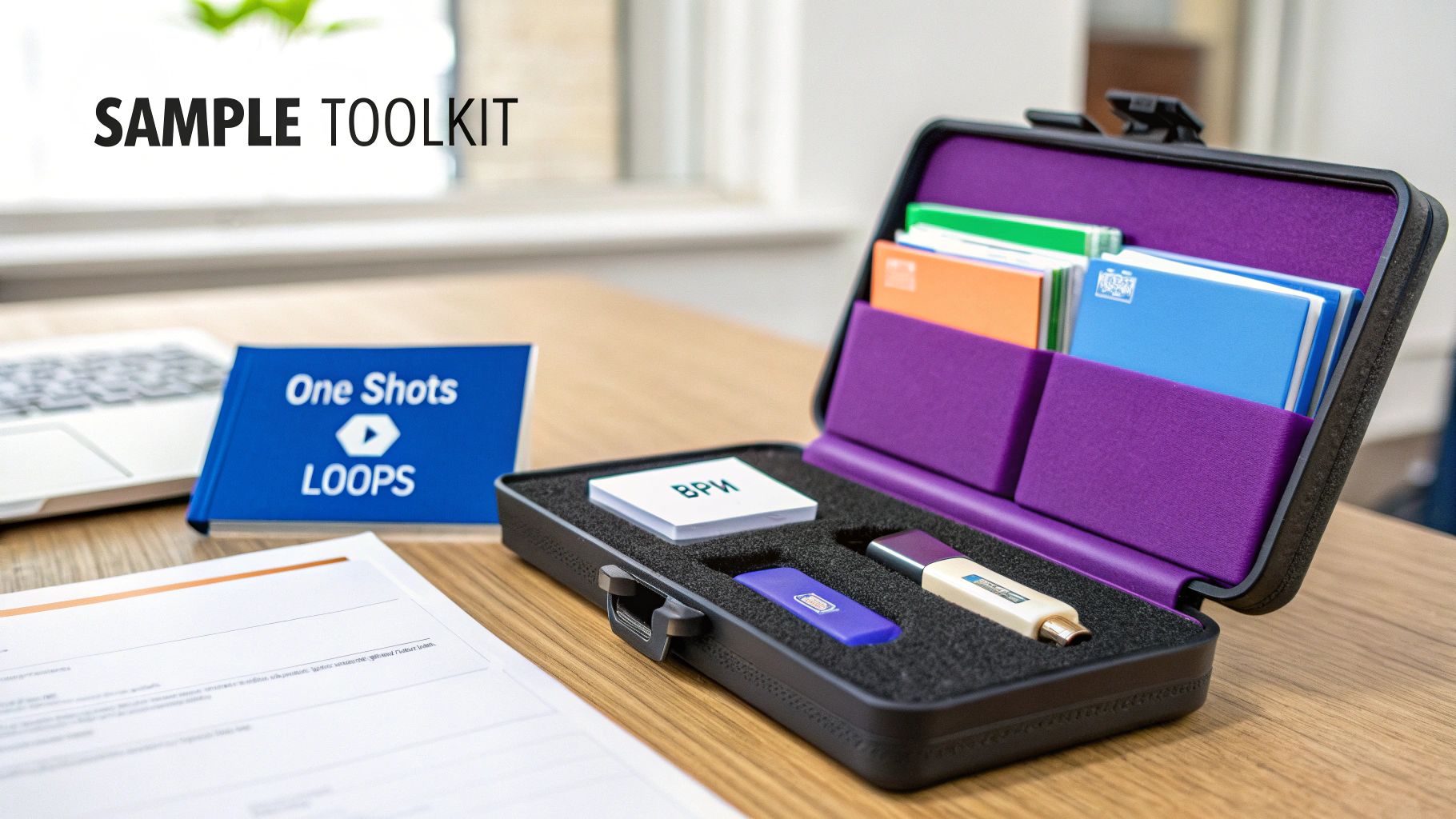
So, what’s the real difference between a game-changing sample pack and a folder of sounds you’ll never touch again? It all comes down to its construction. Think of a pro-level pack less like a random collection of audio files and more like a perfectly organized toolkit built for one job: crafting killer drum and bass.
Just like a mechanic needs a specific wrench for a certain bolt, a producer needs the right sound for the right moment. The best collections give you a diverse, cohesive set of tools, each one ready to perform its function flawlessly in your track.
One-Shots: The Precision Tools
At the core of any good pack, you’ll find the one-shots. These are your individual, isolated drum hits—a single kick, a single snare, one clean hi-hat. They are the precision tools you need to build your drum patterns completely from the ground up, giving you total control over every rhythmic detail.
A professional pack won’t just give you one kick; it’ll give you an entire family of them, each with its own character and purpose.
- Kicks: You should find a range from tight, punchy kicks designed to slice through the mix, all the way to deep, sub-heavy kicks that lay down that foundational weight.
- Snares: A great pack includes those sharp, cracking snares for your main backbeat, but also softer “ghost note” snares for adding subtle rhythmic texture.
- Hats & Cymbals: Look for a solid variety of open hats, closed hats, rides, and crash cymbals. This is what allows you to build hi-hat patterns that breathe and evolve.
Loops: The Inspiration Starters
While one-shots give you surgical control, loops are all about instant inspiration. These are pre-made drum patterns, usually two to eight bars long, that can immediately become the backbone of a new idea.
A high-quality pack won’t just have full drum loops. It’ll also include “top loops” (just the hi-hats and percussion) and dedicated “percussion loops.” These are perfect for layering over your own kick and snare patterns to add intricate detail and movement without having to build it all from scratch.
Professional sample packs are all about saving you time while boosting creativity. Clear organization and high-quality files mean you spend less time searching and fixing, and more time actually making music.
The Non-Negotiable Technical Details
Beyond the sounds themselves, a few technical details separate the pro-grade collections from the rest. These aren’t just nice-to-haves; they’re essential for a smooth workflow and can save you hours of headaches.
First off, audio quality is everything. Professional drum and bass samples are almost always delivered in .WAV format. Unlike compressed MP3s, WAV files are lossless, preserving the full frequency spectrum and transient detail of the sound. This is critical for ensuring your drums have maximum punch and clarity.
Second, clear labeling is an absolute must. Every file should be meticulously named with its tempo (BPM) and, where it makes sense, its musical key. This simple organizational step lets you quickly find sounds that fit your project without any tedious guesswork.
MIDI Files: The Ultimate Creative Flexibility
Finally, the secret weapon found in many top-tier packs is the inclusion of MIDI files. MIDI doesn’t contain any audio. Instead, it holds the performance data—the notes, their velocity, and the timing—that was used to create the audio loop you’re hearing.
This gives you ultimate creative freedom. You can grab the MIDI from a drum loop you love, drag it into your project, and assign your own custom drum and bass samples to it. Instantly, you have a totally new and unique rhythm that still has the professional groove of the original pattern. It’s a powerful way to deconstruct, learn from, and customize pro-level arrangements.
How to Choose the Right Drum Samples for Your Track
Okay, let’s get real. Having a massive sample library is one thing, but the true art comes from making the right creative choices. Think of yourself less as a producer and more as a casting director for your track. Every single drum and bass sample you pick has a role to play, and your job is to audition them to make sure they’re perfect for the part.
This is the moment a good track becomes a great one. It’s not about just grabbing any “good” kick. It’s about finding the right kick that locks in with your sub-bass, the right snare that smacks just right against your synth stabs, and the right hi-hat loop that injects the perfect dose of energy into your groove.
Match Your Samples to Your Subgenre
Drum and bass isn’t just one sound—it’s a massive family tree with tons of different branches. The samples you choose are the first signal you send to the listener about which part of that family your track belongs to. You have to start with a clear idea of the vibe you’re aiming for.
- For Liquid DnB: You’ll want to reach for smooth, polished, and often acoustic-leaning samples. Think clean, tight kicks, snappy snares with a bit of air, and crisp, rolling hi-hat loops. The goal is a sound that feels organic and soulful.
- For Neurofunk: This is where things get aggressive and futuristic. Hunt for kicks with a sharp, cutting transient, snares that sound like they were hammered out of sheet metal, and complex, glitchy percussion loops.
- For Classic Jungle: The vibe here is raw, gritty, and full of energy. Your best friends are classic breakbeats like the Amen or Funky Drummer, deep 808-style kicks, and snares that have that crunchy, lo-fi character.
Listen in Context, Not Isolation
Here’s one of the biggest rookie mistakes: auditioning samples all by themselves. A kick drum might sound absolutely massive on its own, but drop it into your project, and it could completely clash with your sub-bass, turning your low-end into a muddy mess. The secret is to test-drive your sounds inside your actual track.
A killer technique is to lay down a simple, bare-bones groove with a basic kick and snare. Now, start dragging potential hi-hat loops, percussion one-shots, and other rhythmic bits right into your project. Play them over your core beat. You’ll know almost instantly which sounds lock in and create a powerful groove, and which ones just feel awkward and out of place.
The relationship between your kick and sub-bass is everything in drum and bass. Always, always check that your kick’s fundamental frequency isn’t fighting with your bassline. If they’re both trying to own the same sonic space, one will just cancel the other out, completely gutting your track’s power.
The Heartbeat of Your Track
In a genre as focused on rhythm as drum and bass, the kick and snare are absolute royalty. The market data backs this up, with bass drum samples commanding a massive 21.24% market share in the global percussion instrument world in 2023. Snare drums weren’t far behind, taking up 17.59%. As a Cognitive Market Research report points out, this just confirms what we producers already know: these two sounds are critical.
That thunderous, sub-rattling kick and that crisp, cracking snare form the literal heartbeat of your tune, so you have to choose them carefully. To nail this relationship, focus on two things: the transient and the tail. The transient is that initial, sharp “click” or “snap,” while the tail is the body and decay that follows. A snare with a sharp transient will slice through the busiest mix, while a kick with a short, tight tail leaves plenty of room for your sub-bass to do its job. For a deeper dive, our guide to essential drum sounds has you covered on selecting these foundational elements.
When you start treating sample selection as a deliberate, creative act—matching sounds to your subgenre, auditioning them in context, and obsessing over that core kick-snare relationship—you’re building a rhythmic foundation that isn’t just functional. It’s powerful, expressive, and ready to carry your entire track.
Essential Techniques for Punchy DnB Drums
Grabbing the perfect drum and bass samples is a huge first step, but it’s only half the battle. The real magic happens when you start processing them—that’s the sonic alchemy that melts clean, individual hits into a massive, cohesive drum bus that punches through the mix and grabs the listener.
This is where you graduate from being a collector of sounds to a true sound designer. We’re going to walk through four essential stages that will give your drums the weight, character, and professional polish they need to stand out. Think of it like this: your samples are the high-quality bricks, but these techniques are the mortar holding it all together.
Carving Space with EQ
Before you even think about making your drums louder or punchier, you have to make them cleaner. Equalization, or EQ, is your surgical tool for this job. It lets you carve out a specific space for each drum element so they aren’t fighting each other for sonic real estate. If your drum mix sounds muddy, it’s almost always because of overlapping frequencies.
The main goal with EQ in drum and bass is to be subtractive. Instead of just boosting frequencies to make something sound “better,” your first move should be cutting unnecessary frequencies from other sounds to create clarity. For example, a kick drum and a sub-bass are classic enemies in the low-end. A strategic cut in your kick sample right where the sub is most powerful can instantly make both elements sound more defined and hit way harder.
This simple flowchart shows how selecting the right samples from the start can minimize the corrective EQ you’ll have to do later.
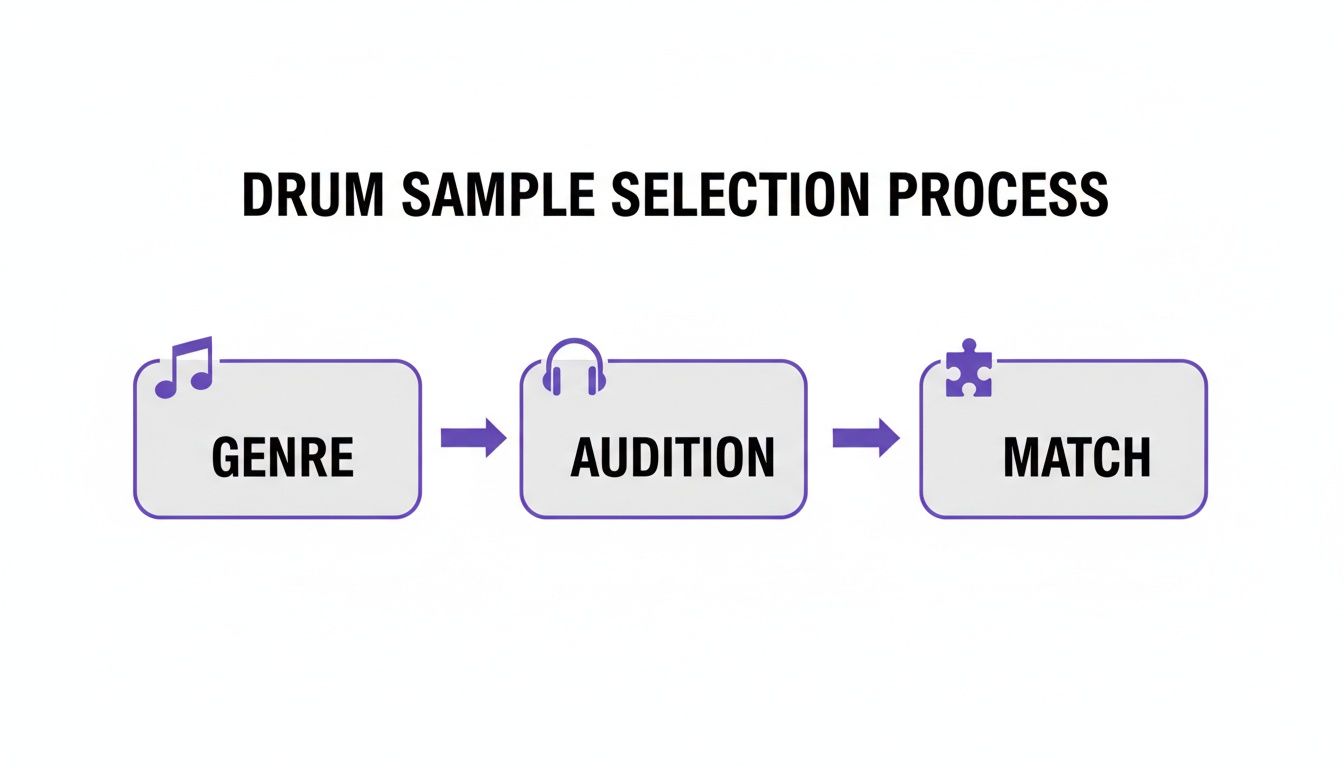
When you match samples to the genre and audition them in context, you’re starting with sounds that already want to play nicely together.
Here’s a quick cheat sheet for some typical EQ moves you might make to get your drums sitting right in a dense DnB mix.
Common EQ Adjustments for Drum and Bass Samples
| Drum Element | Frequency Range to Cut (Problem) | Frequency Range to Boost (Enhancement) |
|---|---|---|
| Kick | 200-400 Hz (Boxiness) | 60-100 Hz (Thump), 2-5 kHz (Click/Attack) |
| Snare | 300-500 Hz (Muddiness/Body) | 150-250 Hz (Weight), 5-10 kHz (Crack/Sizzle) |
| Hi-Hats | Below 200 Hz (Low-end rumble) | 8-12 kHz (Shimmer/Air) |
Remember, these are just starting points! Every sample is different, so always use your ears to guide the final adjustments.
Adding Glue and Snap with Compression
Once your drums are clean and have their own space, it’s time to add that punch and cohesion with compression. At its core, a compressor is just an automatic volume controller. It tightens up the dynamic range of a sound—making the loud parts a bit quieter and the quiet parts louder—to create a more consistent and impactful result.
In drum and bass, compression is your secret weapon for two main things:
- Taming Transients: On individual drums, a compressor with a fast attack can clamp down on the initial “snap” of a snare or the “click” of a kick. This gives you more control and adds body to the sound.
- Adding Glue: When you use a compressor on the entire drum bus (with a slower attack and quick release), it makes all the separate samples sound like they were recorded together in the same room. It’s the “glue” that binds them.
Think of a drum bus compressor as the final coat of varnish on a piece of furniture. It doesn’t change the fundamental structure, but it brings all the separate pieces together, adds a uniform sheen, and makes the final product look polished and complete.
Creating Unique Sounds with Layering
Why settle for one snare when you can have three? Layering is the creative art of stacking multiple drum and bass samples to create a brand-new, hybrid sound that’s completely yours. This is how you move beyond the stock sounds in a sample pack and start carving out your signature sonic identity.
The key to great layering is combining samples that complement each other’s strengths. Don’t just stack three similar sounds; find sounds that fill different roles.
- For a Powerful Snare: Try layering a sample with a sharp, high-frequency “crack” (the transient) over another sample that has a thick, weighty “body” (the tail).
- For a Complex Kick: Combine a tight, punchy kick for the mid-range attack with a deep, clean sine wave to handle the low-end weight.
When layering, pay close attention to the phase relationship between the samples. Nudging one sample forward or backward by just a few milliseconds can totally change the character of the combined sound. Tools like the Channel Sampler in FL Studio make these kinds of micro-adjustments incredibly easy to do.
Injecting Warmth and Character with Saturation
The final touch—the secret sauce—is saturation. Saturation adds subtle harmonic distortion, which brings warmth, presence, and perceived loudness to your drums without actually cranking up their peak volume. It’s the key to making pristine digital samples feel more analog and “alive.”
A little bit goes a very long way here. Gentle saturation on a snare can help it slice through a busy mix, while applying it to a full drum loop can add a pleasing grit that makes the whole beat feel more aggressive and energetic. In FL Studio, a simple tool like Fruity Fast Dist is perfect for adding that extra bit of edge that helps your drums command attention.
Arranging Drums for Maximum Energy and Impact
Having a killer 8-bar drum loop is a fantastic starting point, but it isn’t a finished track. The real magic happens in the arrangement—turning that static loop into a living, breathing journey that builds tension, creates explosive releases, and keeps the listener totally locked in. This is where you graduate from being a beat maker to being a storyteller.
In drum and bass, your drums are the narrator. They set the pace, dictate the flow of energy, and literally define the structure of the song. The choices you make in your arrangement control the entire emotional arc, guiding the listener through the classic intro, buildup, drop, and breakdown that make DnB so addictive on the dance floor.
Building Tension and Release
The secret sauce behind any great DnB tune is the masterful control of tension and release. It’s all about creating anticipation, holding the listener on the edge of their seat, and then delivering a powerful, satisfying drop. Your drums are the number one tool for pulling this off.
One simple but incredibly effective way to build tension is by playing with variations in your core pattern. Instead of letting the same loop drone on for 32 bars, try yanking an element—like the kick drum—for the last four bars right before the drop hits. That sudden void creates a sense of emptiness that makes the kick’s return feel ten times heavier.
Think of your drum arrangement like a rollercoaster. The intro is that slow, clanking climb up the first big hill. The buildup is that heart-pounding moment of anticipation at the very peak. The drop? That’s the exhilarating rush as you plummet down the other side. Every fill and filter sweep is just another twist or turn designed to maximize the thrill.
Automation is another essential trick of the trade. Sweeping a high-pass filter up on your main drum loop during a buildup is a classic move for a reason. As the filter carves out the low end, the drums get thinner and feel more distant, creating this powerful sense of rising energy that resolves when the filter snaps open and the full weight of the beat slams back in.
Using Fills and Transitions
Drum fills are the signposts in your track. They’re signals to the listener, letting them know that something is about to change. A well-placed fill, even a simple half-bar snare roll or a quick burst of pitched percussion, creates a seamless transition between sections, like moving from a verse into a buildup.
Here are a few ways to craft effective transitions with your drum and bass samples:
- Classic Snare Rolls: Program a MIDI pattern with a snare roll that speeds up (from 8th notes to 16ths, then 32nds) right before the drop for an instant energy boost.
- Reverse Cymbals: A reversed crash cymbal is a timeless effect for building anticipation. It swells in volume until it climaxes precisely on the first beat of the next section.
- Silence and Impact: Sometimes, the most powerful fill is no fill at all. A brief moment of total silence right before the drop can make the impact feel absolutely massive.
Deconstructing Professional Arrangements
Honestly, one of the fastest ways to get good at arranging is to just see how the pros do it. This is where sample packs containing construction kits and MIDI files become an incredible learning resource. A construction kit breaks down a finished, pro-level track into its individual stems, so you can see exactly how each element is introduced, layered, and taken away throughout the song.
By digging into these blueprints, you can learn how producers use tiny hi-hat variations to keep things interesting or how they introduce new percussion layers to give the second drop even more punch than the first. You can then take these proven techniques and apply them to your own music, transforming a simple loop into a complete, compelling track.
Using Royalty-Free Samples with Confidence
Jumping into the world of sampling can sometimes feel like you’re tip-toeing through a legal minefield. We’ve all heard those horror stories—producers getting hit with takedown notices or losing huge chunks of their profits, all because of one uncleared sound. This is exactly why getting a grip on royalty-free licensing isn’t just a good idea; it’s essential for building a real, sustainable career in music.
Think of it this way: grabbing a sample from a famous, copyrighted track is like borrowing a stranger’s car without asking. If you get caught, things are going to get complicated, fast. But buying a royalty-free sample pack? That’s like being handed the keys to a brand-new car that’s all yours. You can drive it wherever you want, as much as you want, and never have to look over your shoulder.
The Freedom of Royalty-Free
So, what’s the deal with the term royalty-free? It’s actually pretty simple. It’s a license that gives you the right to use a sound you’ve purchased in your own commercial music, as many times as you like, without ever having to pay extra fees (royalties) to the person who made it.
Once you buy a pack of royalty-free drum and bass samples, you’ve locked in the rights to use those sounds in your music forever. It’s a clean, one-time transaction that offers complete peace of mind.
Using royalty-free samples lets you put 100% of your focus back on creativity. You can produce, release, and monetize your music, knowing your work is legally solid and safe from future profit disputes or takedown claims.
This is a world away from the alternative: clearing a copyrighted sample. That process is a nightmare. You have to hunt down the original owners, negotiate a fee, and often sign away a percentage of your future earnings. For most independent producers, it’s a complicated, expensive, and time-sucking path that just isn’t realistic.
Your Path to Secure Music Production
If you’re planning to release your music on platforms like Spotify or Beatport, or even land commercial placements, going royalty-free is the only professional way forward. It removes all the legal guesswork and ensures that the music you pour your heart into is truly yours. That security is what lets you build a catalog of work without the constant fear that a legal issue from an old track could blow up your future success.
When you choose sounds from trusted sources, you’re not just buying audio files—you’re making a smart investment in your career’s security. For anyone just starting to build their sound library, checking out the different kinds of free sound packs available is a great way to see the quality and variety you can get with a royalty-free license. At the end of the day, this approach lets you get back to what really matters: making incredible music.
Got Questions About DnB Samples?
Even with the best tools in your arsenal, questions always pop up. Let’s tackle some of the most common ones producers have when they start digging into drum and bass samples, so you can clear those creative hurdles and get back to making music.
How Do I Make My Drums Sound Unique with Sample Packs?
Think of a sample pack as your starting point, not the finish line. The real magic—that signature sound you’re chasing—comes from how you process and flip those samples. A raw sample is like a block of clay; it’s your job to sculpt it.
Start by layering. Stack a couple of different snares together to create a hybrid monster that’s completely yours. Don’t just use loops as they are; chop them up. Rearrange the individual kicks, snares, and hats into a totally new, syncopated pattern. This is a classic technique, born in the genre’s earliest days, and it’s still one of the best ways to cook up fresh rhythms.
The most iconic drum and bass producers aren’t defined by the samples they use, but by what they do to them. Effects like saturation, bit-crushing, and creative reverb are your paintbrushes. Use them to create a sonic texture that no one else has.
And don’t be afraid to really mangle your sounds. Resampling is a game-changer. Process a sound, bounce it to a new audio file, and then process it again. This is how you stumble upon those incredible, unexpected results that transform a common sound into a core element of your track.
What Is the Difference Between a Drum Loop and a Breakbeat?
While people often use these terms interchangeably, there’s a key distinction. A breakbeat is a specific type of drum loop, and it’s right at the heart of drum and bass DNA. It’s the rhythmic engine that powers the entire genre.
Breakbeats originally came from drum solos sampled from old funk, soul, and jazz records. These loops, like the legendary “Amen” break, are famous for their syncopated, off-kilter grooves. That’s what gives DnB its signature rolling energy.
“Drum loop,” on the other hand, is just a general term for any pre-made rhythmic pattern. Modern DnB sample packs are full of digitally created loops, but they are almost always designed to capture the high-tempo feel and vibe of those classic, foundational breakbeats.
Can I Use Drum and Bass Samples in Other Genres?
Absolutely. The sonic character of DnB samples makes them incredibly useful tools for producers working in completely different styles. Their sharp transients and raw energy can inject some serious punch into a track that feels a bit flat.
This kind of cross-pollination can lead to amazing results. The high-octane energy of DnB isn’t just for one genre; it can add a unique edge to almost anything.
- For Hip-Hop: A punchy DnB snare can slice right through a dense, sample-heavy mix in a way that many traditional hip-hop snares just can’t.
- For Trap: Try pitching down a fast, intricate hi-hat loop from a DnB pack. You’ll often end up with a unique, rhythmically complex trap pattern that sounds totally fresh.
- For House/Techno: Layering a subtle DnB percussion loop or breakbeat quietly under a standard 4/4 kick can add an incredible amount of groove and movement to your track.
Pulling these sounds out of their natural habitat is a powerful way to give your productions a distinct flavor and stand out from the crowd.
Ready to build your sonic toolkit with professional, versatile sounds? At FL Studio Sound Packs, we provide a massive library of royalty-free drum and bass samples, loops, and construction kits designed to give your tracks a competitive edge. Explore our collection and start creating today.