Your Ultimate Guide to FL Studio Free Drum Kits
Finding high-quality FL Studio free drum kits is simpler than you might think, and it gives you immediate access to pro-level sounds without dropping a single cent. These aren’t just budget-friendly placeholders; they’re the essential tools you need to build modern, hard-hitting beats in genres like hip hop, trap, and just about any style of electronic music.
Why Quality Free Drum Kits Are a Producer’s Secret Weapon
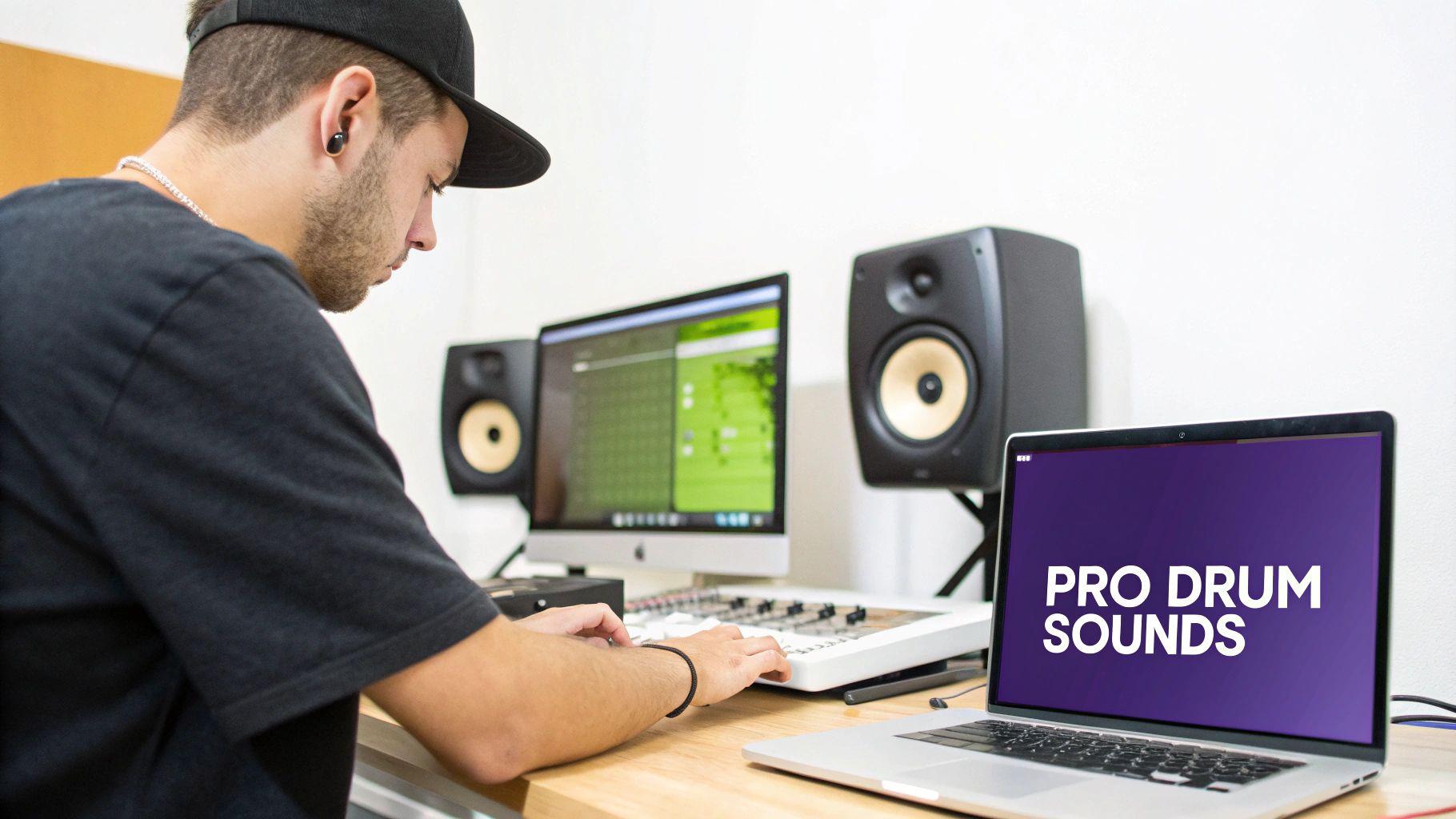
Let’s get one thing straight: killer beats start with killer drums. The rhythm section is the backbone of almost all modern music, and the quality of your drum sounds can absolutely make or break your track. It wasn’t that long ago that getting professional-grade drum samples meant shelling out serious cash for massive sample libraries or booking expensive studio time.
Thankfully, that’s all changed. High-quality free drum kits have completely leveled the playing field, giving producers at every level the power to create tracks that can hang with commercial releases.
The Foundation of Modern Production
If you’re just starting out, especially in genres like hip hop and trap, you need punchy kicks, cracking snares, and clean hi-hats. Free kits give you those fundamental building blocks, letting you start creating right away. They’re also a fantastic learning tool, helping you get a feel for sound selection and how different drum elements lock together in a mix.
This easy access has kicked off a huge wave of creativity. Back in 2021, for instance, the hunt for free drum kits exploded among FL Studio users, right as the software saw a 40% increase in downloads. Bedroom producers wanted the pro sound without the pro price tag, and these 100% royalty-free packs helped fuel a 25% jump in independent hip-hop releases on platforms like SoundCloud. You can learn more about the impact of royalty-free samples and see how significant this shift has been.
“A well-curated library of drum sounds is more valuable than any expensive plugin. It’s the first step in defining your sonic signature and ensuring your beats have impact.”
Moving Beyond Thin, Recycled Sounds
Forget the old days of digging through folders full of weak, overused, and frankly unusable sounds. The standard for freebies has shot way up. Many top-tier producers and sound design companies now offer premium, royalty-free packs as a way to build their communities and show off the quality of their work.
This means you can get your hands on sounds that are:
- Professionally Processed: Many free kits come pre-mixed and mastered, so they’re ready to drop into your projects for instant polish.
- Genre-Specific: Whether you’re making gritty trap, smooth lo-fi, or anything in between, you can find kits designed for that exact vibe.
- Inspiring and Unique: The best packs offer distinctive sounds that can spark new ideas and help you break out of a creative rut.
At the end of the day, using high-quality free drum kits gives you a competitive edge right from the start.
Deciding between free and paid options often comes down to your immediate needs and long-term goals. Here’s a quick breakdown to help you choose.
Free Kits vs. Paid Packs: A Quick Comparison
| Feature | Free Drum Kits | Paid Sample Packs (e.g., FL Studio Sound Packs) |
|---|---|---|
| Cost | $0 | Varies, typically $10 – $100+ |
| Quality | Can be hit-or-miss, but many are high-quality | Generally high, professionally engineered |
| Variety | Often focused on a specific niche or sound | Extensive libraries covering multiple genres and styles |
| Originality | Widely used, so sounds can be less unique | Often more unique and exclusive sounds |
| Included Content | Usually one-shot drum samples | One-shots, loops, MIDI files, synth presets, FX |
| Support & Updates | Typically none | Ongoing customer support and potential updates |
| Best For | Beginners, producers on a budget, quick inspiration | Serious producers, commercial projects, building a core library |
Free kits are an incredible way to build your library without spending money, while paid packs from services like FL Studio’s Sound Packs offer a more curated and comprehensive toolkit. Many producers use a mix of both to get the best of both worlds.
Where to Find Free Drum Kits You Will Actually Use
Knowing why you need quality sounds is one thing; figuring out where to find them is the real trick. The internet is absolutely flooded with “free” drum kits, but a lot of them are just recycled, low-quality sounds or come with sketchy licensing. To save you from a frustrating digital scavenger hunt, let’s zero in on the reliable spots that seasoned producers actually trust.
A great place to start is with established sound design companies. These folks often give away high-quality packs to show off what their premium products can do. They know that if you love their freebies, you might just come back for more. This means the samples are usually well-processed, clearly labeled, and—most importantly—100% royalty-free.
Top-Tier Sound Design Companies
A perfect example of this is Ghosthack, which has become a go-to for producers in electronic and hip-hop genres. Their commitment to quality shines through even in their free stuff. By 2024, their ‘Best Free Sample Packs for FL Studio’ bundle had become a massive resource, offering a whopping 2,048 files totaling 3.17 GB pulled from 24 of their premium packs.
This collection, downloaded by over 100,000 producers, was a direct hit for the 55% of FL Studio users in hip-hop and electronic music who need dependable, royalty-free sounds for their commercial releases. You can explore Ghosthack’s massive free bundle here.
Other solid sources include:
- Cymatics: Famous for their genre-specific packs, especially for trap and EDM. They frequently drop free “teaser” packs that are loaded with usable sounds.
- ProducerGrind: A staple in the hip-hop community, offering tons of free kits built for modern trap and drill beats.
- MusicRadar: They run a huge archive of royalty-free samples from their “SampleRadar” series, covering just about every genre imaginable.
Here’s a pro-tip from my own experience: always preview the sounds before you download. Any decent site will have an audio player. This simple step saves you from hoarding gigabytes of samples you’ll never touch and helps keep your library lean and inspiring.
Community-Driven Goldmines
Beyond the big company websites, producer communities are fantastic places to dig up unique FL Studio free drum kits. These platforms are where creators share their own custom-made sounds, often with a specific style or vibe you just won’t find anywhere else.
The most active community by far is Reddit’s r/drumkits subreddit. With a member count that blew past 50,000 by 2024, it’s a constantly updated stream of user-submitted packs. You’ll find everything from kits modeled after famous producers to wild, experimental sound collections. Just be sure to double-check the posts for licensing info, as it can vary.
Another key to success is prioritizing audio quality from the get-go. Always choose kits that provide sounds in .WAV format over .MP3. WAV files are uncompressed, which means they keep their full audio fidelity. That gives you much more headroom when it’s time to mix and process your drums.
For more ideas on expanding your library, check out our guide on free sound packs. By focusing on these trusted sources and vetting the quality upfront, you can build a powerful, professional-sounding library without spending a dime.
How to Install Drum Kits in FL Studio the Right Way
You’ve tracked down some killer FL Studio free drum kits and now you’re itching to make some beats. Getting those sounds from your download folder into the DAW is the next hurdle, and doing it right from the jump will save you a ton of frustration down the road. Let’s get your new sounds locked and loaded.
Before you even touch FL Studio, the workflow is pretty simple: find a kit, give it a listen, and download it.
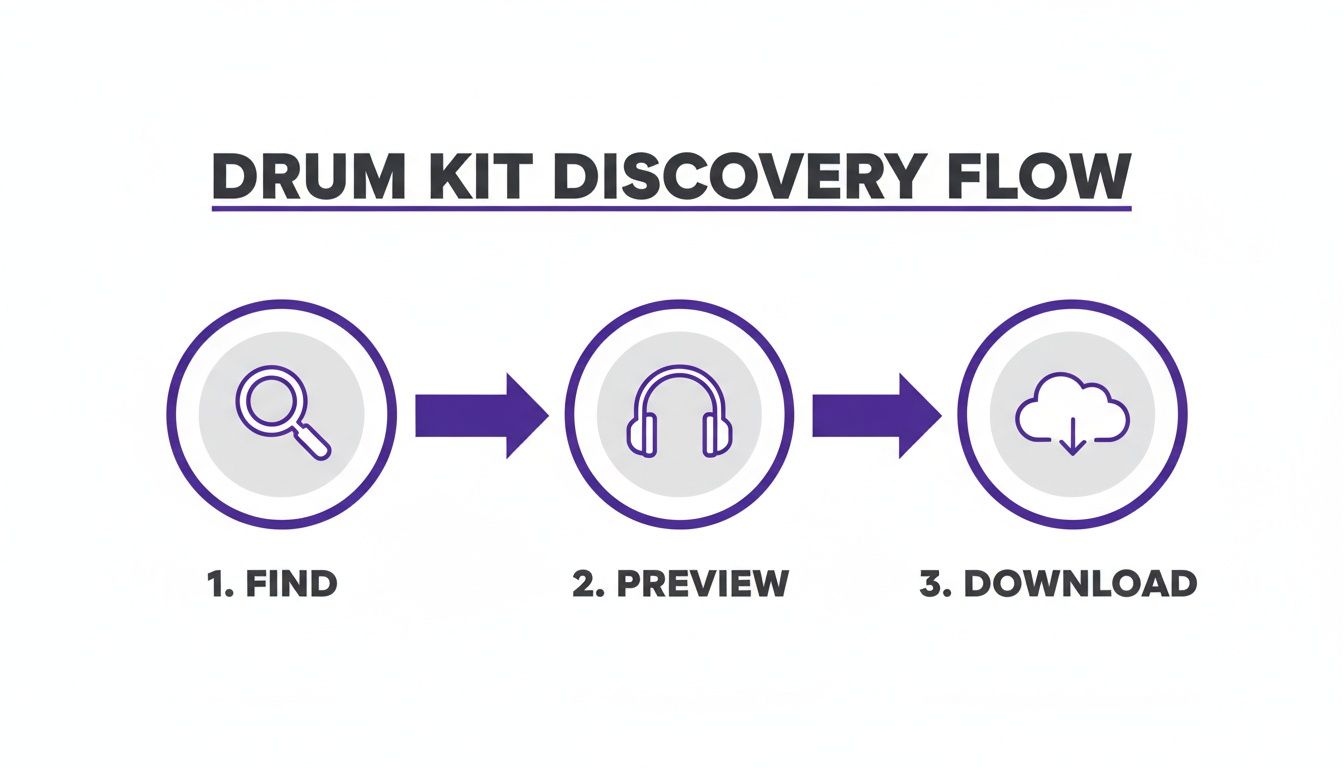
This little process keeps your hard drive from getting clogged with sounds you’ll never actually use. Once you have the goods, it’s time to integrate them properly.
The Pro Method: Add Kits to the FL Studio Browser
This is, hands down, the best way to manage your sounds. By telling FL Studio where your drum kits live, you make them a permanent fixture in the Browser. Every time you open a new project, they’ll be right there waiting for you. It’s a one-time setup that pays dividends forever.
Here’s the game plan:
- Get Organized First: Before anything else, create one master folder on your computer for all your samples. Something like
Documents\My Drum Kitsis perfect. This is your new sound library headquarters. - Unzip Your Kits: Most kits come in a .zip file. Make sure you extract each one into its own subfolder inside your main
My Drum Kitsfolder. A clean folder structure is a happy folder structure. - Tell FL Studio Where to Look: Pop open FL Studio and head to Options > File Settings. In the “Browser extra search folders” section, click on an empty folder slot. A window will pop up—just navigate to and select that main
My Drum Kitsfolder you created.
After you’ve pointed FL Studio to the right place, all your kits will show up right in the Browser panel on the left.
Crucial final step: Don’t forget to hit the little “Reread structure” button at the top of the Browser (it looks like two arrows chasing each other). This forces FL Studio to scan the new folder and make all your fresh sounds appear instantly.
The Quick Fix: Drag-and-Drop
Sometimes you just want to audition a single sound without committing to installing a whole pack. For those moments, the drag-and-drop method is your best friend.
Just open your computer’s file explorer, find the .WAV file you want to use, and literally drag it from the folder and drop it onto FL Studio’s Channel Rack or Playlist. Boom, it’s in your project.
While this is super fast for quick inspiration, it’s a terrible long-term strategy. The sample isn’t saved in your FL Studio library, so if you want to use that same kick in another beat, you’ll have to go digging for it all over again. Stick to the Browser method for sounds you want to keep.
Once installed correctly, your custom folder will be listed right alongside FL’s default packs, making it a breeze to audition your new library. If you want to dive deeper into working with your new sounds, you should learn more about how to use samples in FL Studio in our article.
Organize Your Sound Library to Make Better Beats Faster
A messy sound library is a total creativity killer. We’ve all been there—you get a killer idea for a beat, but then you spend the next twenty minutes digging through a chaotic swamp of folders named “NEW DRUMS FINAL” or “AWESOME KIT 2.” By the time you find a half-decent kick, the inspiration is long gone.
That digital clutter is the fastest way to get completely derailed. Seriously, spending a little time upfront to organize your FL Studio free drum kits is one of the best things you can possibly do for your workflow. Think of it as an investment. Fifteen minutes of sorting today can save you hours of frustrated clicking next week.
The goal here isn’t just to be tidy; it’s to keep you locked in that creative zone. When you can find the perfect sound in seconds, you build momentum and actually finish more tracks.
Choose Your Folder Structure
Look, there’s no single “correct” way to organize your library. The real key is to pick a system that makes sense to you and then stick with it. Consistency is what makes it all work.
Here are a few proven methods that producers swear by:
- By Genre: This is a great approach if you jump between different styles. You could have main folders for “Trap,” “Lo-Fi,” “House,” and “Drill.” Inside each of those, you’d break it down further with subfolders for Kicks, Snares, 808s, and so on.
- By Sound Type: This is my personal favorite for pure speed. You create top-level folders like “Kicks,” “Snares,” “Hi-Hats,” “808s,” and “Percussion.” Then, inside each of those, you can have subfolders by genre or the kit’s source. When you need a snare, you just go to one place. Simple.
- By Source: You can also organize everything by where you got the kit, using folders like “ProducerGrind,” “Cymatics,” or “Splice.” This can be handy if you want to recall the specific vibe of a certain brand’s sounds.
Whichever method you choose, just make sure it feels intuitive to you. The best system is the one you’ll actually use without thinking about it.
A well-organized sound library isn’t about perfection; it’s about speed. The less time you spend searching for sounds, the more time you spend creating music. Your goal should be to find any sound you need in under ten seconds.
Master the FL Studio Browser
Once your folders are in order, you can make them even more powerful by leaning on FL Studio’s built-in tools. The Browser on the left is way more than just a file tree; it’s a dynamic search engine for your entire sound collection.
A real game-changer is tagging your favorite samples. Find a kick drum you absolutely love? Right-click it in the Browser and add a color tag. Maybe you use red for your hardest-hitting kicks and blue for the softer, more subtle ones. You can then sort your Browser by color to instantly pull up your go-to sounds.
You should also be adding your main sample folders to the Browser’s “Favorites” by right-clicking them. This gives you one-click access without having to navigate deep into your computer’s directories every single time.
This combination—a logical folder structure on your hard drive and smart tagging inside FL Studio—means you’ll spend way less time hunting and way more time creating. As you build your collection, you might find that pre-made loops offer a great starting point for new ideas. If you’re interested, you can explore a variety of MIDI drum patterns that can speed up your beat-making process even more.
When It’s Time to Move Beyond Free Drum Kits
Free drum kits are fantastic. They’re the starting block for so many of us, letting you get your hands dirty and learn the craft without dropping a dime. But there’s a moment in every producer’s journey where you hit a wall. That same accessibility that made freebies so great can start to box you in.
You might start noticing it when your beats sound a little… familiar. Like you’ve heard that snare a hundred times before. Or maybe you realize you’re spending more time trying to fix a weak kick or EQ a harsh hi-hat than you are actually making music. These are the tell-tale signs you’re ready for an upgrade.
Recognizing the Limitations of a Free-For-All Library
The biggest headache with a library built purely on free downloads? A total lack of sonic glue. You’re grabbing a kick from one producer’s giveaway, a snare from another, and some hi-hats you found on a forum years ago. Sure, you can force them to work together, but it takes a ton of extra EQ, compression, and processing just to make them sound like they belong in the same track.
That patchwork approach can quietly sabotage your mix before you’ve even laid down a melody. A professionally designed pack, on the other hand, is built from the ground up with a consistent sonic vision. The sounds are meant to fit together.
The Real Value of a Curated Sound Pack
Stepping up to a premium sound collection is one of the most significant leaps you can make in your production quality. When you invest in something like the official FL Studio Sound Packs, you’re getting way more than just a folder of WAV files. You’re buying a cohesive, professional toolkit.
Here’s what that actually means for your workflow:
- A Cohesive Sound Palette: Every sound is engineered to complement the others. This saves you an incredible amount of time on mixing and just makes the whole process feel smoother.
- Unique Character: Paid packs are where you find the custom-designed, signature sounds that help you carve out your own lane and stop sounding like everyone else.
- Guaranteed Quality: No more sifting through poorly recorded, clipped, or downright unusable samples. Everything is clean, punchy, and ready to go right out of the box.
The switch from free to paid isn’t just about getting “better” sounds. It’s about investing in a faster, more creative workflow. You’re literally buying back the time you used to waste fixing problems.
This is a natural part of growing as a producer. Recent surveys show that while 65% of independent hip-hop and trap producers start out with free kits, frustrations with filler sounds and inconsistency eventually push about 30% of them toward paid options. Making that switch can slash your sound-searching time by up to 50%—a massive efficiency boost for anyone serious about making beats. Discover more insights about producer sample pack usage.
It’s More Than Just Drums
Another huge advantage of premium packs is all the extra creative fuel they come bundled with. These are the kinds of tools you rarely, if ever, find in free kits.
We’re talking about things like:
- MIDI Files: These give you the raw patterns for melodies, chord progressions, and drum grooves. They’re perfect for reverse-engineering professional arrangements and learning new writing techniques.
- Construction Kits: Imagine a full, pro-level beat broken down into every individual stem—the bass, the synths, the pads, everything. They are an incredible resource for understanding how complex layers and arrangements are built.
At the end of the day, moving beyond FL Studio free drum kits is about leveling up. It’s a conscious decision to invest in quality, consistency, and a set of tools that will not only make your music sound better but will also make you a smarter, faster, and more inspired producer.
Your Top Questions About Free Drum Kits, Answered
As you start diving into the world of FL Studio free drum kits, you’re bound to have some questions. It’s totally normal. Getting these sorted out early will help you build your sound library the right way and skip a lot of the headaches that trip up producers.
Let’s get right into the most common questions I hear.
Are All “Free” Drum Kits Actually Free to Use?
This is a huge one, and the short answer is a hard no. Just because a kit is labeled ‘free’ doesn’t mean you have a green light for everything.
The magic phrase you need to hunt for is “100% royalty-free.” That’s your golden ticket. It means you can use those sounds in your music, release it on Spotify or Apple Music, and never have to worry about paying someone royalties or giving them credit down the line.
Reputable sources like Cymatics or Ghosthack are always crystal clear about their licensing. But if you’re grabbing a random .zip file from an old forum thread or a YouTube description with zero info, you’re taking a big risk. Using sounds you don’t have the rights to can get your track pulled down, or even worse, lead to legal trouble if your song starts to get popular. Always, always stick to kits that explicitly state they are royalty-free.
Why Won’t My New Kits Show Up in FL Studio?
This is probably the single most common hiccup everyone runs into, but thankfully, the fix is almost always super simple. If your fresh new drum kits are playing hide-and-seek in the FL Studio Browser, it’s usually one of two things.
First, you have to make sure the folder you unzipped is in a place FL Studio knows to look. A solid, no-fuss location is the default user folder, which you can usually find at Documents\Image-Line\Data\FL Studio\Audio\User.
Second, and this is the crucial part, you need to give FL Studio a little nudge to tell it something new is there.
- The Quick Fix: At the top of the Browser, click the “Reread structure” button. It’s the one that looks like two arrows chasing each other in a circle. This forces a refresh and often solves the problem instantly.
- The Permanent Solution: If that doesn’t work, head over to
Options > File Settings. In the “Browser extra search folders” list, manually add the file path to the main folder where you store all your drum kits. This tells FL Studio to scan that spot every single time, so you’ll never have this issue again.
What’s the Difference Between a Drum Kit and a Loop Pack?
Getting this straight is fundamental to building a truly useful sound library. It really just comes down to a choice between total control and quick convenience.
A drum kit is a collection of individual, one-shot samples. Imagine a folder with one kick sound, one snare sound, one hi-hat, and so on. These are the building blocks you use to program your own patterns from scratch in the Channel Rack. This gives you absolute control over every single hit.
A loop pack, on the other hand, is filled with pre-made drum patterns. These are ready-to-go audio files of full beats that you can just drag and drop right into your Playlist. Loops are amazing for getting an idea going fast or just for finding a vibe, but they don’t offer the same creative freedom as building a beat from the ground up with a one-shot kit.
“A classic rookie mistake is downloading every free kit you can find. It just leads to option paralysis. A small, killer library of sounds you actually love is way more powerful than a bloated folder of mediocre samples you have to dig through every time you start a track.”
Be a ruthless curator of your own sound library. When you download a new kit, spend five minutes listening to every sample. If a kick is weak or a snare just isn’t your style, delete it on the spot. Your future self will thank you for keeping things lean, mean, and inspiring.
Ready to stop the endless search for quality sounds and just start making great music? At FL Studio Sound Packs, we’ve curated a massive, 100% royalty-free library of premium drum kits, loops, MIDI, and construction kits built for producers who are serious about their craft. Get immediate access to our entire catalog for one simple price. Explore the full sound library at flstudiosoundpacks.com.